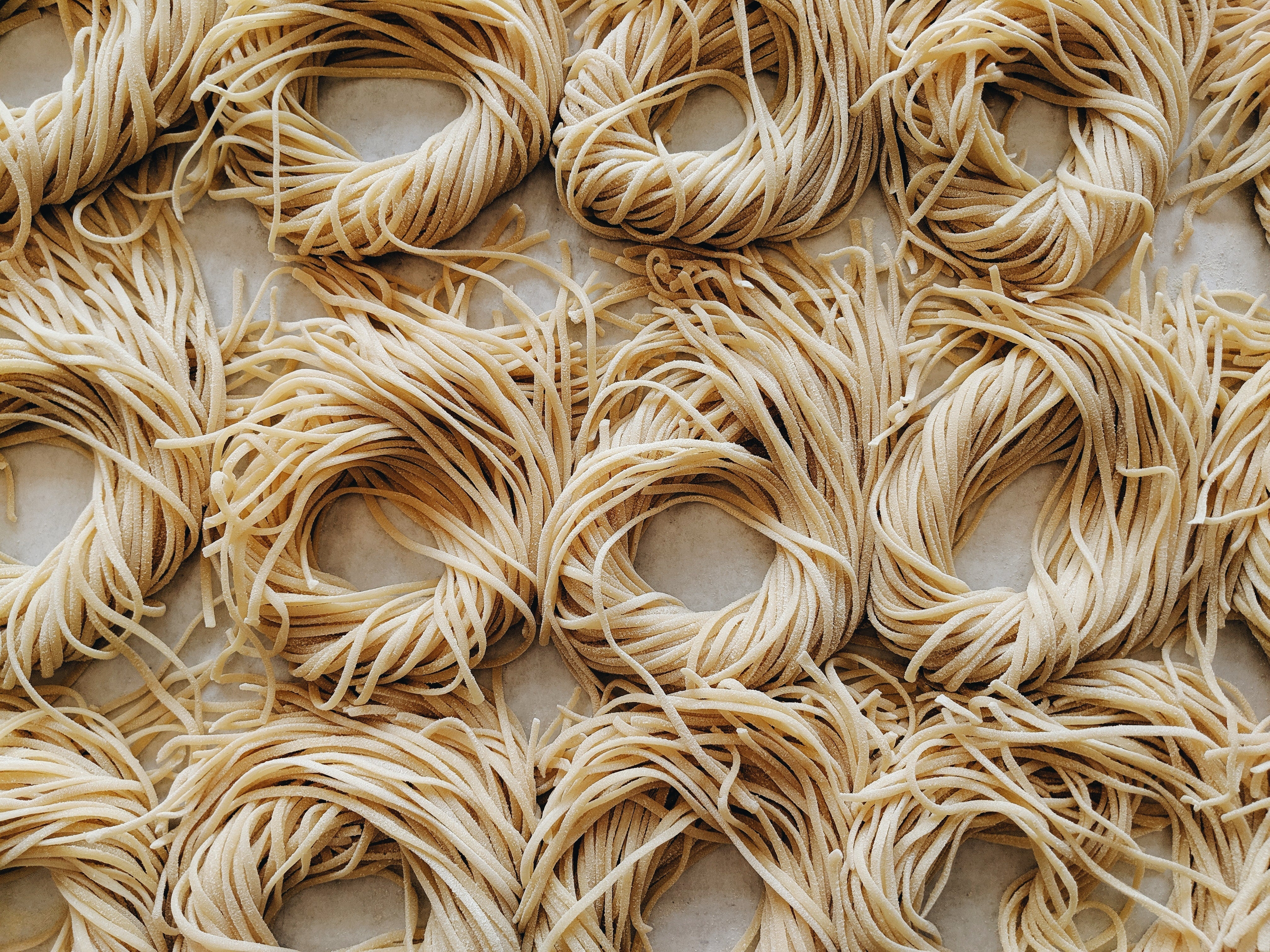
Stop hating on pasta, it’s a quality carb – especially if you go wholewheat.
Let’s deal with the elephant in the room. The one major problem with pasta when it comes to maintaining a healthy diet. The problem being that it's very easy to go overboard on pasta. Very easy to power through an entire plate of the stuff, drenched in creamy sauce and hiding underneath mounds of grated cheese, and then go back for more.
If that’s you, or ever has been you, you might find that reducing the amount of pasta you eat results in you losing weight. And that could well be a good thing, but it’s not necessarily fair to blame the pasta for the weight being there in the first place.
In fact, a lot of the flak pasta and other carbs get these days seems undeserved. Carbohydrates are an important part of a healthy diet and if you’re an active person they’re vital to providing the energy you need. There are nutritional benefits beyond that energy too, especially if you opt for wholewheat pasta, more on which in due course.
In short, however, it’s fair to say that if you can keep your pasta portions in hand (a fist-sized portion is a good rule of thumb, now go back enjoy the “in hand” joke) it can be a staple of a balanced diet.
To discuss the health benefits and possible downsides of pasta, we spoke to dietitian Chloe Hall of the British Dietetic Association.
What are the pros and cons of eating pasta?
Let’s dive right into the good stuff: pasta is great source of energy, hence all those pre-marathon carb-loading, opens in a new tab pasta parties.
“Pasta has a low glycaemic index which means that the carbohydrate is slowly released in the body,” says Hall. “This helps keep blood sugar levels steady, and there’s evidence this may help with appetite control.”
“It is a rich source of complex carbohydrates and functions as fuel for activity such as running.
“Wholegrain, opens in a new tab varieties also provide fibre, which is important for a healthy digestive system.”
When it comes to the cons, it’s worth noting that pasta takes a lot of criticism that could be better directed elsewhere on your plate.
“People often attribute weight gain to pasta but it is usually the large portion sizes or the creamy sauces we add that are to blame,” says Hall.
“Pasta in itself is not going that filling. Pair it with a protein source such as lean meat, prawns or pulses, and lots of vegetables for a balanced meal.”
Is wholewheat pasta more nutritious than white pasta?
The extra fibre isn’t the only reason to go wholewheat.
“Wholewheat pasta contains approximately double the amount of fibre, magnesium and potassium,” says Hall.
“Fibre is needed for a healthy gut, magnesium for energy production and potassium for heart health. Eating wholegrains – as opposed to the refined kind – has also been linked to a reduced risk of heart disease, stroke and type 2 diabetes.”
Wholewheat pasta also contains other essential minerals like copper (for energy and tissue strength), selenium (for immune function), manganese (for bone production) and B vitamins.
How does pasta differ nutritionally from other common carbs like rice, bread and potatoes?
“All of these differ slightly in how they release energy into the bloodstream,” says Hall.
“Potatoes also contain vitamin C, which pasta doesn’t. They are all good sources of carbohydrate – but you get more of the added benefits with the wholewheat versions.”
Written by Nick Harris-Fry for Coach and legally licensed through the Matcha publisher network, opens in a new tab. Please direct all licensing questions to legal@getmatcha.com.