


28 products · per labeled serving
GLP-1 Friendly Breads
Every bread here meets the same per-serving test, read from its own Nutrition Facts: an FDA-defined good source of protein (5 g or more) or fiber (2.8 g or more), 5 g or less added sugar, 2 g or less saturated fat, under 460 mg sodium and 300 calories or less per slice, roll or muffin. The thresholds come from FDA labeling rules (21 CFR 101.54 and the 2024 "healthy" rule) and from the 2024 expert review in Obesity on nutrition during anti-obesity medication treatment, which prioritizes protein and fiber and smaller, more frequent meals.
- 5–10 gprotein
- ≤ 3 gfiber
- ≤ 5 gadded sugar
- ≤ 1.5 gsaturated fat
Current labels range from 5 to 10 g protein and 2 to 3 g fiber per serving, with 0 to 2 g added sugar and 0 to 1.5 g saturated fat. Everything ships frozen and bakes from the freezer, so you can bake one roll or a couple of slices at a time. Pastries and filled pastas are not included because they do not meet the thresholds.
"GLP-1 friendly" describes nutrition facts, not a health benefit. Talk to your prescriber or a registered dietitian about what is right for you.


Sourdough Whole Wheat Loaf
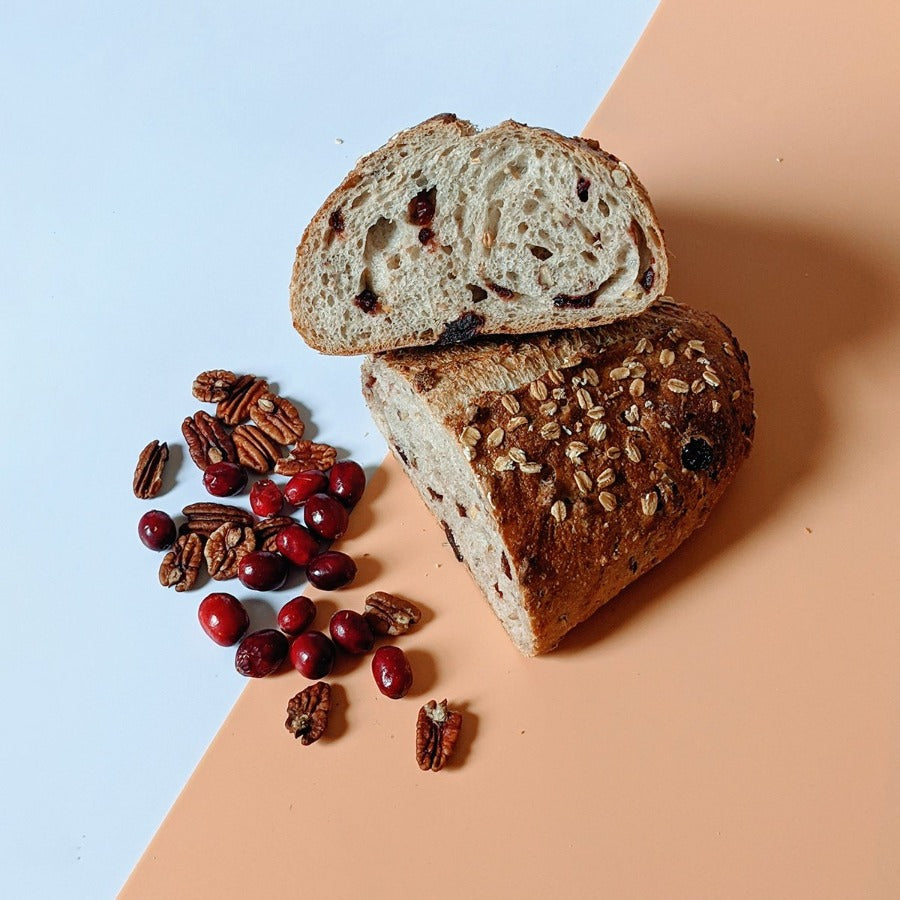

Slow-Fermented Cranberry-Pecan Loaf
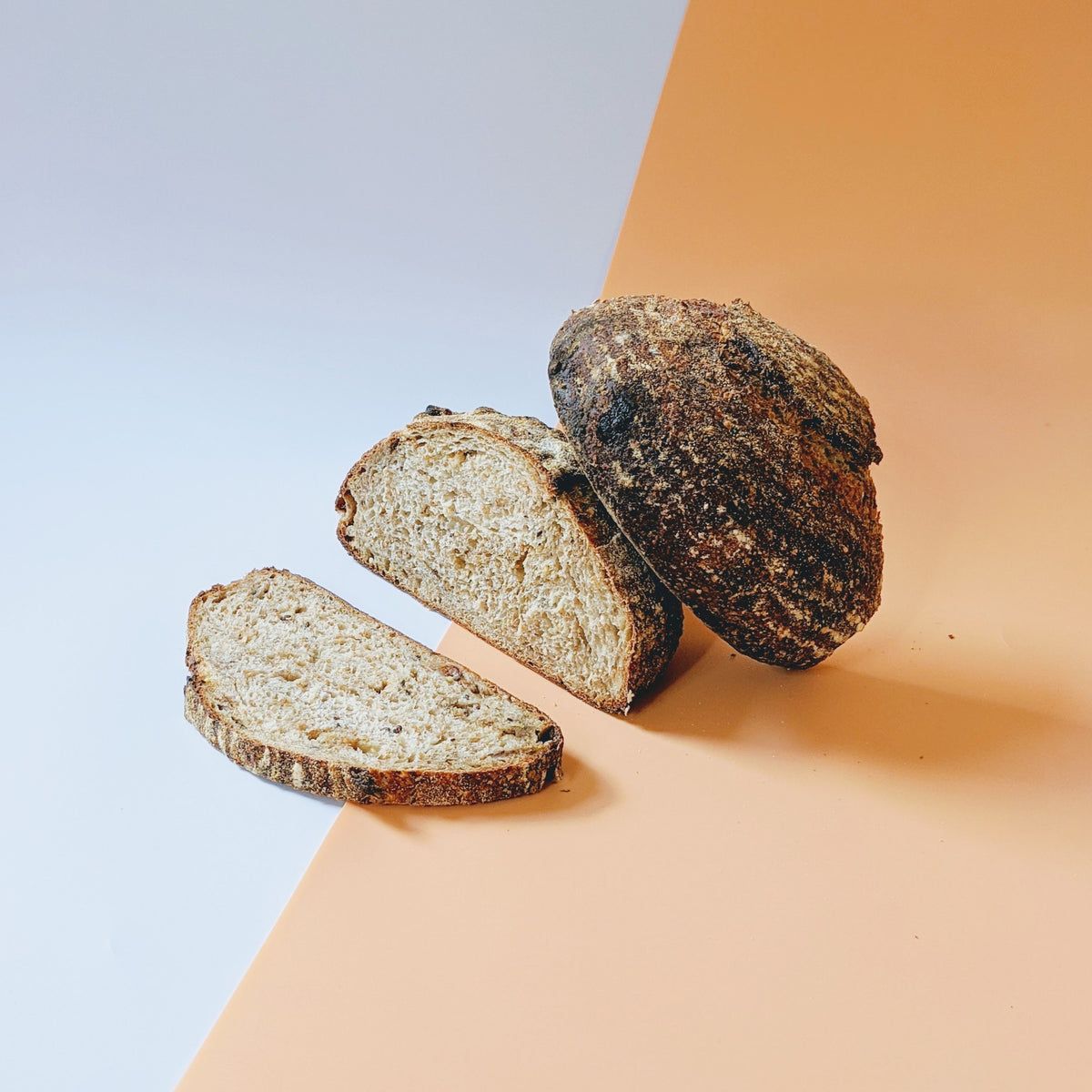
Sourdough 7-Grain Loaf
How a product earns the badge
Per labeled serving, from the product's own Nutrition Facts. All four must hold; the badge is a description of the label, not a health claim.
Protein or fiber
A good source of protein (5 g or more) or fiber (2.8 g or more) per serving, as defined by the FDA (21 CFR 101.54).
Added sugar ≤ 5 g
The FDA's limit for a "healthy" grain product, and under the 10% of calories recommended during anti-obesity medication treatment.
Saturated fat ≤ 2 g
And under 10% of the serving's calories. Clinical guidance advises avoiding high-fat foods, which can worsen gastrointestinal side effects.
≤ 300 calories, < 460 mg sodium
A modest share of a 1,200 to 1,500 calorie day, and under the 20% Daily Value the FDA calls "high" for sodium.

Questions people ask
Which Wildgrain breads are GLP-1 friendly?
Which Wildgrain breads are GLP-1 friendly?
Every bread in this collection meets the criteria per slice or roll. Examples from the current labels: Sourdough 7-Grain Loaf has 5 g protein and 3 g fiber in a 57 g slice at 130 calories; Slow-Fermented 3-Seed Bread has 7 g protein and 3 g fiber per slice; Slow Fermented Sandwich Bread has 10 g protein in two slices at 150 calories; Slow-Fermented Protein Ciabatta has 10 g protein in a 57 g slice at 120 calories; the Gluten-Free Country Loaf has 3 g fiber in a 36 g slice at 100 calories. All have 0 to 2 g added sugar and 0 to 1.5 g saturated fat per serving.
How much sodium is in these breads?
How much sodium is in these breads?
Between 230 and 430 mg per slice, which is under the 460 mg (20% Daily Value) line the FDA uses for "high", but above the 230 mg limit for a "healthy" claim on grain products. We do not describe these breads as low sodium; the exact number is on each Nutrition Facts panel.
What does "GLP-1 friendly" mean at Wildgrain?
What does "GLP-1 friendly" mean at Wildgrain?
It is a description of the Nutrition Facts, not a health claim. A product carries the GLP-1 Friendly badge only if, per labeled serving, it is an FDA-defined good source of protein (5 g or more) or fiber (2.8 g or more), and stays at or under 5 g added sugars, 2 g saturated fat (and under 10% of its calories from saturated fat), under 460 mg sodium, and 300 calories or less. The badge, and the protein and fiber numbers shown on each product page, are read from the product's own nutrition label.
Sources: 21 CFR 101.54 (good source and high claims), FDA "healthy" rule, 2024 (added sugar and saturated fat limits), FDA Nutrition Facts label guide (20% Daily Value counts as high).
Why protein and fiber?
Why protein and fiber?
The 2024 expert review on nutrition during anti-obesity medication treatment recommends more than 60 to 75 g of protein per day (up to 1.5 g per kg of body weight) to limit loss of lean mass, and 21 to 25 g of fiber per day for women and 30 to 38 g for men, with whole grains named as a fiber source. It also advises keeping saturated fat and added sugar each under 10% of calories and avoiding high-fat foods, which can worsen gastrointestinal side effects. Our thresholds follow those priorities.
Source: Almandoz et al., Obesity 2024.
Is sourdough better for blood sugar?
Is sourdough better for blood sugar?
The evidence is mixed, so we do not claim it. A 2023 systematic review of 25 randomized trials found no clear consensus on sourdough's effect on glucose response; a 2022 meta-analysis found a small lower post-meal rise with low to very low certainty, and European regulators have not approved any sourdough health claim. Our breads are slow-fermented because of how they taste and keep, and the badge is based on protein, fiber, sugar, fat and sodium per serving, not on fermentation.
Why are smaller portions mentioned?
Why are smaller portions mentioned?
The same clinical guidance advises people on GLP-1 medications to eat smaller, more frequent meals and to stop eating before feeling full. Every Wildgrain product ships frozen, so you bake one roll, one muffin or a few slices at a time and keep the rest in the freezer for months. That is a storage fact, not a medical benefit.
Source: Almandoz et al., Obesity 2024.
Why don't croissants, cookies or pastries carry the badge?
Why don't croissants, cookies or pastries carry the badge?
They do not meet the thresholds. A Wildgrain croissant has 9 g of saturated fat per croissant (about 29% of its calories) and a giant cookie has 15 to 17 g of added sugar per half cookie, both well above the 2 g saturated fat and 5 g added sugar limits. We publish the full Nutrition Facts on every product page so you can decide for yourself.
Do you have a GLP-1 box or subscription?
Do you have a GLP-1 box or subscription?
Not yet. The closest match is the High-Protein plan, which is built from products with at least 10 g of protein per serving. You can also build a custom box and filter any collection by the GLP-1 Friendly tag.
Is this medical advice?
Is this medical advice?
No. Nothing on this site treats, prevents or manages any condition or medication side effect. The badge summarizes nutrition facts against published thresholds. For individual guidance, talk to your prescriber or a registered dietitian.
"GLP-1 friendly" describes nutrition facts, not a health benefit: per labeled serving the product is a good source of protein or fiber and stays within FDA limits for added sugar and saturated fat. It is not medical advice and does not treat or prevent any condition or medication side effect. Talk to your prescriber or a registered dietitian about what is right for you.

