By Lucy Yanckello, Ph.D.
Can you get homemade bread delivered to your door? Can you order bakery-quality bread online?
Yes, you can get homemade-style bread delivered straight to your door. Ordering bakery-quality loaves online is easier than ever. A good delivery service bakes its bread, freezes it at peak freshness, and then ships it to you, ready to finish at home in your oven. You get the same crunchy crust and open crumb that you would find at a bakery without having to leave your house. Baking a Wildgrain Plain Sourdough Loaf from frozen fills your home with that fresh-from-the-oven smell whenever you want it.
What’s the difference: bakery bread delivery vs. grocery store bread?
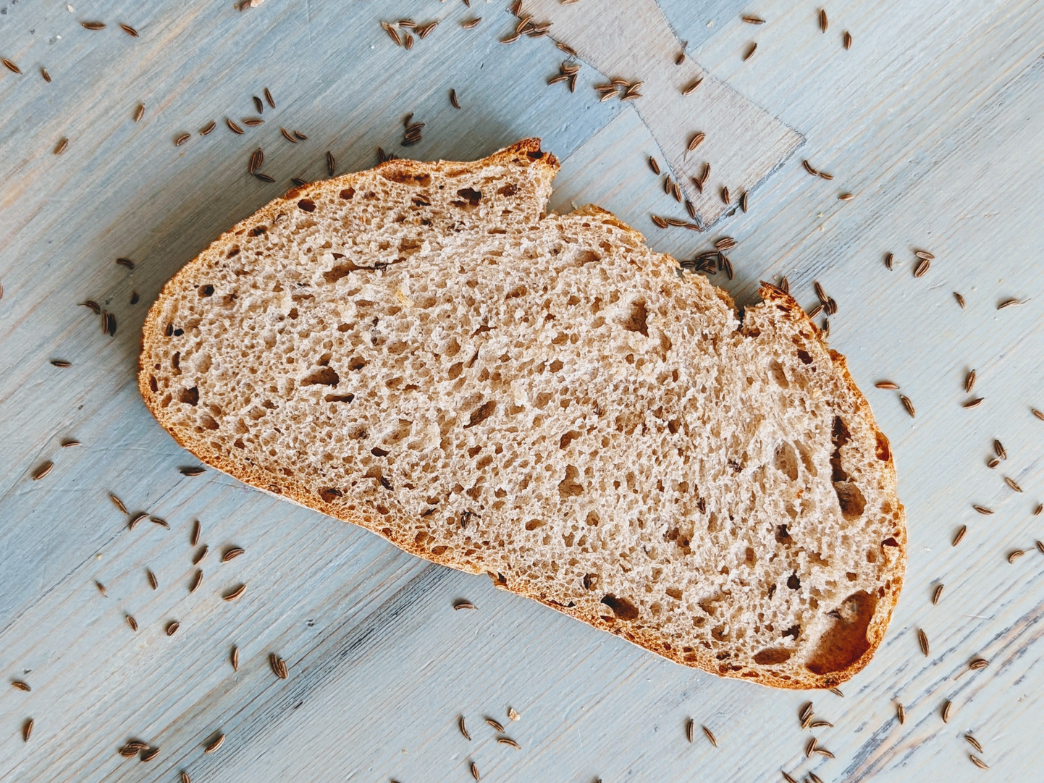
The difference comes down to how the bread is made and how long it sits before you eat it. Grocery store bread is usually mass-produced and shipped to stores, sitting on shelves for days before it is bought. This means it often relies on additives and preservatives to stay soft. On the other hand, bakery bread delivery skips the need for preservatives and additives because it is frozen right after baking. The difference shows up in flavor, texture, and the simplicity of the ingredient list. A loaf like Wildgrain’s Sourdough Rye tastes like it just came out of the bakery oven because it essentially did.
What’s healthier to eat, bakery bread delivery vs. grocery store bread?
Bakery bread tends to be the healthier choice due to a shorter ingredient list, omitting preservatives and additives because it does not need to be shelf-stable. Bakery bread is often made with whole grains, which increase the fiber, protein, and vitamin and mineral content compared with grocery store bread. Additionally, many find naturally fermented breads gentler on digestion since the slow fermentation begins breaking down starches before the bread ever hits your plate. Toasting a slice of Wildgrain’s Sourdough Whole Wheat Loaf is an easy way to work more whole grains into your diet.
Does grocery store bread have more preservatives than bakery bread? Are the ingredients in bakery bread better than bread from the grocery store?
Grocery store bread often does contain more preservatives than bakery bread, since a long shelf life depends on ingredients that slow staling and mold growth. You will commonly see dough conditioners, added sugars, and preservatives on the label of a standard supermarket loaf. Bakery bread leans on a shorter, simpler ingredient list because it is meant to be eaten fresh rather than stored for weeks. That usually means flour, water, salt, and a natural leavening ingredient. When freshness is built in through freezing rather than chemistry, for instance with Wildgrain’s bake-from-frozen bread, the ingredients list tends to stay shorter.
Is bread frozen at peak freshness better than store-bought bread? Does frozen bakery bread taste fresh?
Yes, freezing slows the chemical changes that cause bread to stale, which locks in the flavor and texture of the loaf at its peak freshness. Staling comes mostly from starch molecules rearranging as bread cools and sits, and freezing essentially pauses that process. When you bake a loaf at home, it comes back to life soft and fresh, not dry and crumbly. A frozen bakery loaf, like from Wildgrain’s selection of bake-from-frozen bread, often tastes fresher than a supermarket loaf that has been on the shelf for weeks.
Does home bread delivery affect the quality of bakery bread?
Home delivery actually protects the quality of bakery bread rather than diminishing it. Because the loaves are frozen right after preparing and shipped in insulated coolers, they stay at peak freshness from the bakery to your freezer. There is no long stretch on a shelf where the bread slowly dries out and stales. You control the final step of baking each loaf exactly when you want to eat it, which is what keeps the delivered bread tasking bakery fresh. This is why people love Wildgrain’s selection of bake-from-frozen bread delivered to your home.
How long does frozen bakery bread last compared to grocery store bread?
Frozen bakery bread lasts for far longer than a grocery store loaf left at room temperature. A standard supermarket loaf is usually best within several days, before it starts to stale or grow mold. Frozen bread, kept frozen and well sealed, holds its quality for months since freezing keeps the starches from breaking down. Once you bake a frozen loaf, enjoy it over a few days, and pull another loaf out of the freezer when you are ready. This flexibility means only what is needed is baked, and far less bread gets wasted.
Is bakery bread home delivery more expensive than grocery store bread? How does Wildgrain’s bread delivery work?
Bakery bread delivery can cost more per loaf than the cheapest grocery store bread, though the gap narrows when you factor in quality and freshness. You are paying more for the artisanal baking, better ingredients, and bread that arrives at peak freshness rather than near the end of its shelf life. Wilgrain works as a bakes-from-frozen subscription, where you choose your box and frequency and a curated selection ships frozen to your door. You bake each loaf at home whenever a craving hits, so nothing goes stale waiting to be eaten. For many people, fresh-baked bread on their own schedule is well worth the difference.
Where can I buy healthy bread online for home delivery? Is Wildgrain the best bread home delivery service?
At Wildgrain, we specialize in making high-quality, fresh breads that are delivered directly to your door. Wildgrain is the first bake-from-frozen delivery subscription service for breads, rolls, pastries, and fresh pastas. Some of our popular breads include Wildgrain Sourdough Whole Wheat Loaf, Wildgrain Plain Sourdough Loaf, and Wildgrain Sourdough Rye Loaf. Learn more about Wildgrain and our artisanal baking and cooking methods.
Best Bread Home Delivery Service: How Wildgrain's Bread Delivery Works
Wildgrain's breads are prepared in independent, artisanal bakeries with high quality ingredients. The breads are shipped frozen in insulated boxes and delivered direct to your home, anywhere nationwide. By shipping frozen, Wildgrain products maintain the highest quality, so you can enjoy fresh baked breads at home. That's why customers consider Wildgrain among the best home delivery services for bread.
About the Author
Lucy Yanckello received her Ph.D. in nutrition from the University of Kentucky College of Medicine. She currently works as a medical writer and enjoys being able to help people better understand nutrition and science.
This content is for informational use only and does not replace professional nutrition and/or medical advice, diagnosis or treatment. It is not a substitute for and should not be relied upon for specific nutrition and/or medical recommendations. Please talk with your doctor about any questions or concerns.