By Lucy Yanckello, Ph.D.
Hummus has become a staple in refrigerators everywhere, praised for its creamy texture and versatility as a spread, dip, and sauce. Although it feels indulgent, hummus is actually very nutrient dense. This often gets overlooked, especially regarding how much it has to offer on the fiber front. As most people are not meeting daily fiber recommendations, hummus could be an easy addition to your diet to help get you to your goals.
Does hummus have fiber? Is hummus a good source of fiber?
Yes, hummus does have fiber. A standard two tablespoon serving of hummus contains approximately 1 to 2 grams of fiber, with a quarter-cup serving providing closer to 3 to 4 grams. A food is considered a “good” source of fiber when it provides at least 3 grams per serving, so hummus earns that designation when eaten in a reasonable portion. Paired with Wildgrain’s Pita Bread, which adds its own fiber into the equation, Wildgrain Traditional Hummus is a good source of fiber and can be part of a snack that helps meet your daily fiber goals.
Is hummus good for gut health? Is hummus good for bowel movements?
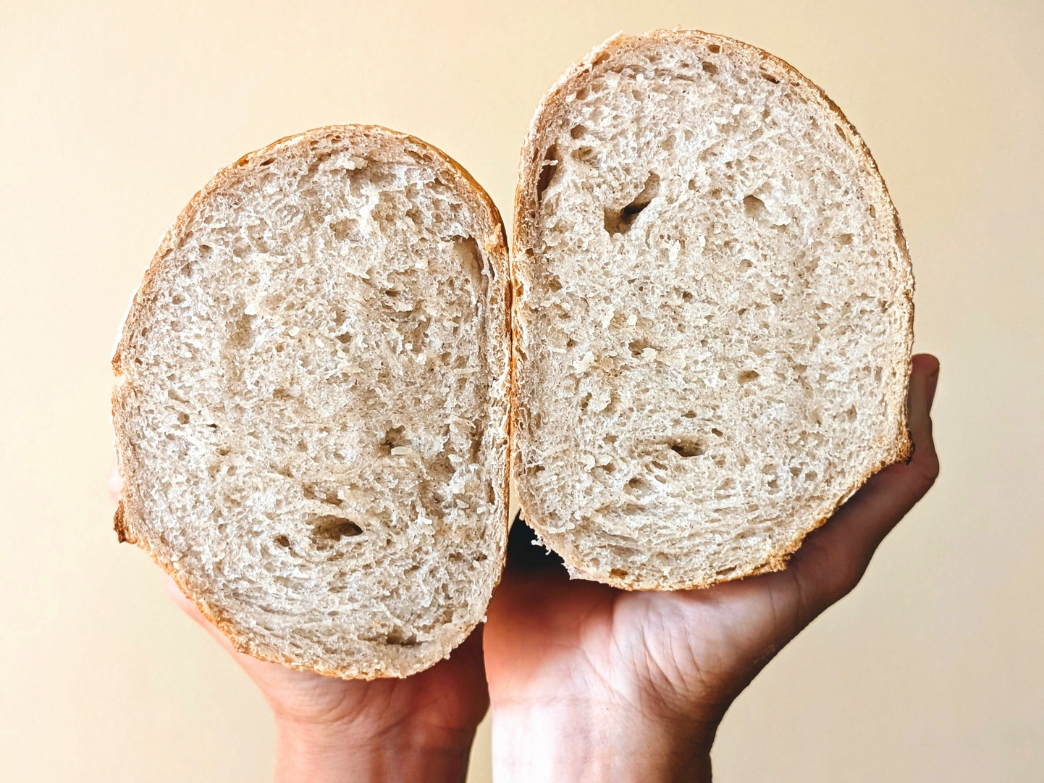
Hummus is beneficial for gut health, largely due to the type of fiber found in chickpeas. Chickpeas are rich in soluble fiber which ferments in the large intestine and feeds the beneficial bacteria in your gut. This process produces beneficial metabolites such as short-chain fatty acids, which support your gut lining and reduce inflammation. Chickpeas also contain some insoluble fiber which adds bulk to stool and helps keep things moving in your digestive tract, reducing constipation. Paring Wildgrain Traditional Hummus, with sourdough or slow-fermented breads that have a long fermentation process making them more gentle on your gut like Wildgrain’s Sourdough Bread or Wildgrain’s Slow-fermented Artisanal Pita, are smart combinations for overall digestive comfort.
Which has more fiber, hummus or avocado or white beans?
Of the three, white beans have the most fiber by a significant margin, with approximately 9 to 10 grams per half-cup serving. Hummus and avocado are closer in fiber content to each other, with a half cup of hummus providing around 6 to 7 grams, and a half of a medium avocado providing around 5 grams. Each food delivers fiber alongside a distinct nutritional package. Avocado brings heart-healthy fats, white beans add plant-based protein, and hummus offers a combination of both alongside other key micronutrients such as iron and folate. Rather than choosing one, keeping all three as part of your diet is a practical way to diversify your fiber intake.
Which is better for fiber, chickpeas or hummus?
Chickpeas and hummus are nutritionally very close when it comes to fiber, which makes sense since hummus is made from chickpeas. A half-cup of cooked chickpeas contains around 6 to 8 grams of fiber, and the same amount of hummus contains roughly 6 to 7 grams. The small difference reflects the dilution that occurs when chickpeas are blended with other ingredients into hummus.
Which type of hummus has more fiber? What can I add to hummus for more fiber?
Hummus made with white beans, lentils, or edamame tends to offer more fiber per serving than traditional hummus made from chickpeas. These legumes are naturally denser in fiber than chickpeas. If you want to boost the fiber of chickpea hummus, stir in ground flaxseed, which adds about 2 grams of fiber per serving and has almost no impact on flavor. Blending in extra chickpeas or steamed cauliflower can also bump up fiber content while keeping the texture smooth. Topping your hummus with hemp seeds or enjoying it with raw vegetables adds both fiber and texture as well. If you prefer pita, Wildgrain’s Slow-fermented Artisanal Pita can contribute a meaningful addition of fiber to your overall snack too when paired with hummus, like Wildgrain Traditional Hummus.
Is hummus ok to eat every day? What happens when you eat hummus every day?
You can eat hummus everyday, and in fact there is meaningful evidence to suggest that eating it regularly is beneficial to your health. Studies on legume consumption have found that people who eat chickpeas and hummus regularly tend to have a better overall diet quality, higher fiber intake, and healthier body weight. Eating hummus daily can contribute to steadier blood sugar levels, improved cholesterol profiles, better digestive regularity, and greater satiety between meals. However, be mindful of the sodium content in store-bought varieties of hummus. Choosing lower-sodium options or making hummus at home easily keeps this in check.
Is hummus healthy for you? Is hummus considered junk food?
Hummus is not junk food. Traditional hummus is made from a short list of whole, minimally processed ingredients - chickpeas, tahini, olive oil, lemon juice, and garlic - each of which brings nutritional value to the table. Be sure to avoid hummus made with unnecessary additives, and choose a hummus made only from simple ingredients, like Wildgrain Traditional Hummus. Hummus provides meaningful amounts of plant-based protein, fiber, folate, iron, and heart-healthy fats, which mirrors the nutritional profile of a whole food, not a packaged junk food. Paring hummus with an equally quality dipper, like Wildgrain Sourdough Bread or Wildgrain Slow-Fermented Artisanal Pita, means your whole snack is providing a high standard of nutritional quality.
How to get 100% of daily fiber? How much hummus is healthy per day?
The recommended daily fiber intake is 25 grams for women and 38 grams for men, though most adults only consume about half of that on a daily basis. Getting 100% of daily fiber requires a consistent, whole-diet approach that builds meals around legumes, whole grains, vegetables, and fruits. Hummus fits naturally into that framework as an easy high-fiber staple. Anchoring a daily snack around hummus and pita, like Wildgrain Traditional Hummus and Wildgrain Slow-Fermented Artisanal Pita, is a simple habit that will meaningfully contribute to closing the fiber gap.
How do I find good, healthy hummus? Can store bought hummus be healthy?
Store-bought hummus can be healthy, but quality varies widely, so knowing what to look for on the nutrition label matters. The gold standard is a short, recognizable ingredient list, such as in Wildgrain’s Traditional Hummus. Checking sodium content is also worth an extra few seconds, since it can easily add up. If you want complete control, making hummus at home only requires a blender and about ten minutes.
Where can I buy the best fresh hummus and pita bread online?
At Wildgrain, we specialize in making high-quality, fresh breads and pastas that are delivered directly to your door. Wildgrain is the first bake-from-frozen delivery subscription service for breads, pastries, fresh pastas, and more. Some of our popular items include our Wildgrain Traditional Hummus, Wildgrain Slow-Fermented Artisanal Pita, and Wildgrain Plain Sourdough Loaf. Learn more about Wildgrain and our artisanal baking and cooking methods.
Best Home Delivery Service for Food: How Wildgrain's Food Delivery Works
Wildgrain's products are prepared in independent, artisanal bakeries with high quality ingredients. They are shipped frozen in insulated boxes and delivered direct to your home, anywhere nationwide. By shipping frozen, Wildgrain products maintain the highest quality, so you can enjoy fresh food at home. That's why customers consider Wildgrain among the best home food delivery services.
About the Author
Lucy Yanckello received her Ph.D. in nutrition from the University of Kentucky College of Medicine. She currently works as a medical writer and enjoys being able to help people better understand nutrition and science.
This content is for informational use only and does not replace professional nutrition and/or medical advice, diagnosis or treatment. It is not a substitute for and should not be relied upon for specific nutrition and/or medical recommendations. Please talk with your doctor about any questions or concerns.