By Dr. Jorge, Ph.D.
Wildgrain, opens in a new tab is the first bake-from-frozen subscription box for sourdough breads, fresh pastas, and artisanal pastries.
Nuts are a popular snack, but are some nuts healthier than others? From heart-healthy almonds to gut-friendly walnuts, each type of nut offers its own unique health benefits. In this article, we’ll explore the differences between nuts and why including a variety in your diet can boost your overall health.
Are nuts healthy? What is the healthiest nut to eat?
Nuts are generally considered healthy and are good sources of a variety of nutrients, including healthy fats, protein, fiber, antioxidants, and vitamins and minerals. Since different nuts contain varying amounts of these nutrients, there isn’t a single “healthiest” nut. Because each type has its own strengths, it’s recommended to enjoy a mix of nuts, such as peanuts, cashews, walnuts, and almonds. Nuts, especially when consumed regularly, can be a nutrient-dense addition to a balanced diet that can support heart health, help manage weight, and provide sustained energy throughout the day.
Are nuts high in protein? What nuts have high protein?
Nuts are generally high in protein, though some contain more than others. Peanuts have the highest protein content at 7 grams per ounce. Almonds and pistachios are close behind, with 6 grams per ounce, while cashews contain about 5 grams per ounce. Including a variety of nuts in your diet can help you meet your protein needs while also providing healthy fats, fiber, and other essential nutrients.
Do nuts have more protein than eggs?
Nuts can contain more protein than eggs, but it depends on the type of nut and the size of the egg. For reference, a medium egg has about 6 grams of protein, meaning a serving of peanuts provides slightly more protein than a medium egg. However, a large egg contains around 7 grams of protein, which is comparable to a serving of peanuts.
Which has the most protein, almonds or cashews or peanuts or walnuts?
Peanuts contain the highest amount of protein per serving, followed by almonds, cashews, and walnuts. As noted above, peanuts provide 7 grams of protein per ounce, with almonds close behind at 6 grams. Cashews and walnuts have the least protein among these four, offering 5 and 4 grams per ounce, respectively. Beyond protein, all these nuts provide healthy fats, fiber, vitamins, and minerals, making them a nutritious addition to a balanced diet.
Which nut is healthier, cashews or almonds or walnuts or peanuts?
Each type of nut has its own unique nutritional benefits, making them all healthy in different ways and making it difficult to rank them in terms of overall healthiness. Cashews are known for supporting heart health, almonds can help lower cholesterol and maintain a healthy weight, walnuts may promote a healthy gut, and peanuts can help reduce inflammation. By including a variety of nuts in your diet, you can be exposed to a broad spectrum of nutrients and tap into all of the potential health benefits.
What is the best nut to eat to lose weight? Which nut burns the most fat?
Like trying to pick the healthiest nut, there is no single nut that is best for weight loss or can burn the most fat. However, nuts that are high in fiber, protein, and healthy fats can be helpful for weight loss because these nutrients can help you feel full longer. Some of the best nuts for weight loss include almonds, walnuts, pistachios, and cashews. All of these nuts make satisfying, nutrient-dense snacks that can support your weight loss journey.
Which nut is best for diabetics? Which nut has the least sugar?
The best nuts for diabetics are raw or dry-roasted nuts, as it’s important to avoid nuts with added sugar, oil, salt, honey, or chocolate, which can raise blood sugar levels. While there isn’t a single best nut for diabetes, almonds are often recommended for diabetics because their high fiber and healthy fat content can help prevent blood sugar spikes and support insulin regulation.
All nuts naturally contain small amounts of sugar. Walnuts and Brazil nuts have the least amount of sugar, with 0.7 grams per 1-ounce serving. Pecans contain about 1 gram of sugar per ounce, almonds 1.4 grams, and cashews 1.7 grams. Eating nuts in moderation and paying attention to portion sizes can help diabetics enjoy the nutritional benefits of nuts without negatively impacting blood sugar levels.
Are trail mix nuts healthy? Is trail mix a good source of protein?
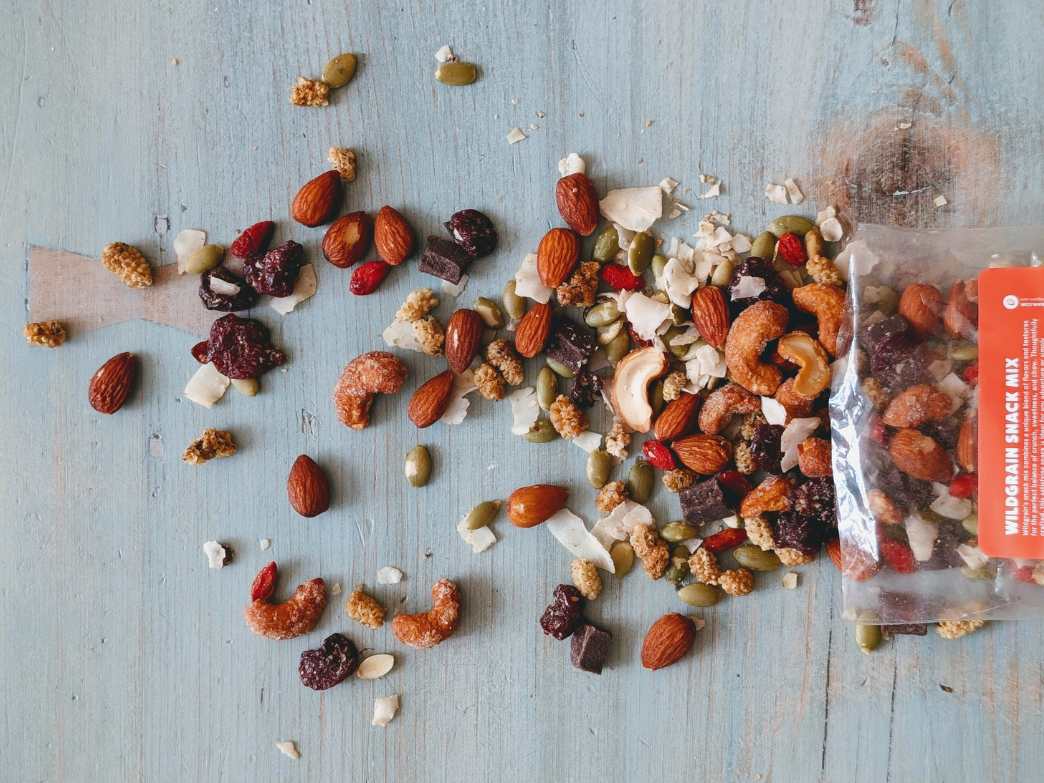
Trail mix can be healthy depending on whether the nuts are raw or have added sugar, salt, or other ingredients. It can also be a good source of protein, depending on the mix. Traditional trail mixes typically include nuts, seeds, and dried fruits, all of which provide protein. However, not all trail mixes are created equal, so be sure to check the label to confirm the protein content and ingredients.
Is it healthy to eat nuts every day? Is it okay to eat nuts every day?
It is absolutely healthy and recommended to eat nuts every day. A handful of nuts daily can provide numerous health benefits, including improved heart health, better weight management, and a reduced risk of cancer and diabetes, among many others. Consuming a variety of nuts allows you to access the unique benefits of each type of nut, while even a small daily portion can help improve your overall health and well-being.
Where can I buy the best fresh bread and pasta online?
At Wildgrain, we specialize in making high-quality, fresh breads that are delivered directly to your door. Wildgrain is the first bake-from-frozen delivery subscription service for breads, rolls, pastries, and fresh pastas. Some of our popular breads include sourdough whole wheat, sourdough 7-grain, slow fermented 3-seed breadSourdough rye bread, and sourdough rye. Some of our popular pastas include spinach and ricotta ravioli, gluten-free cheese tortellini, truffle and parmigiano reggiano ravioli, potato gnocchi, and fresh tonnarelli. Learn more about Wildgrain and our artisanal baking and cooking methods.
Best Home Delivery Service for Food: How Wildgrain's Food Delivery Works
Wildgrain's products are prepared in independent, artisanal bakeries with high quality ingredients. They are shipped frozen in insulated boxes and delivered direct to your home, anywhere nationwide. By shipping frozen, Wildgrain products maintain the highest quality, so you can enjoy fresh food at home. That's why customers consider Wildgrain among the best home food delivery services.
About the Author
Dr. Jorge has been a public health researcher for many years, holding both a Bachelor's degree and a Ph.D. in Chemistry. They presently work as a medical writer and love being able to assist others in understanding various health and scientific topics.
This content is for informational use only and does not replace professional nutrition and/or medical advice, diagnosis or treatment. It is not a substitute for and should not be relied upon for specific nutrition and/or medical recommendations. Please talk with your doctor about any questions or concerns.